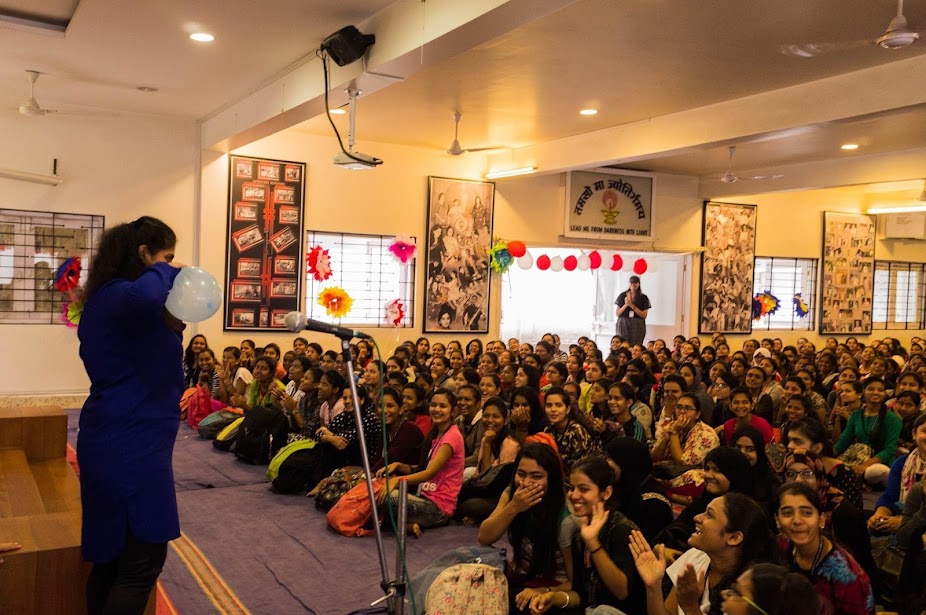
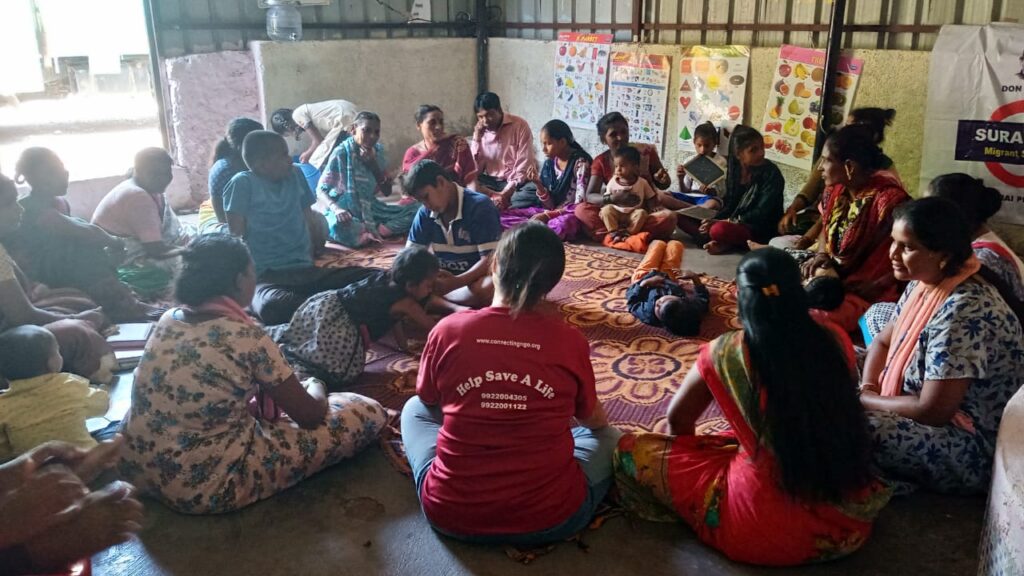
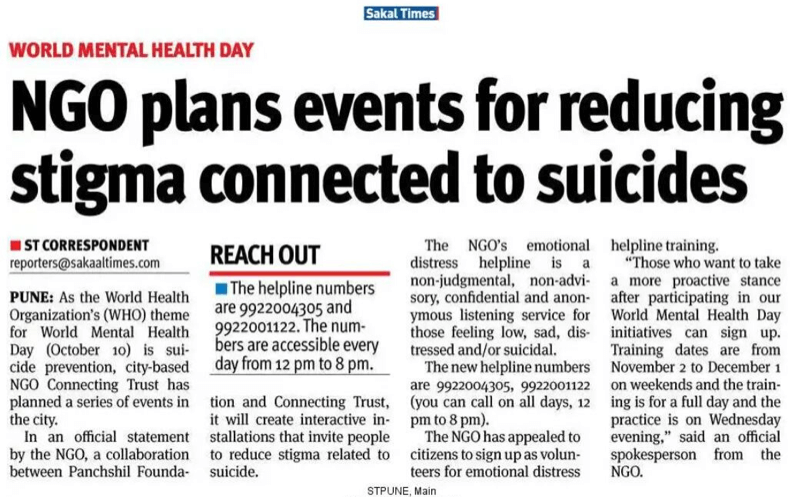
NGO plans events for reducing stigma connected to suicides
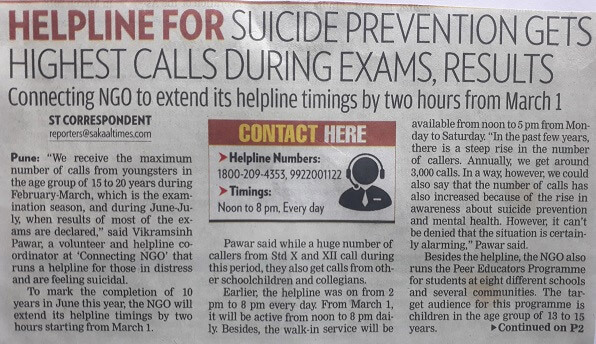
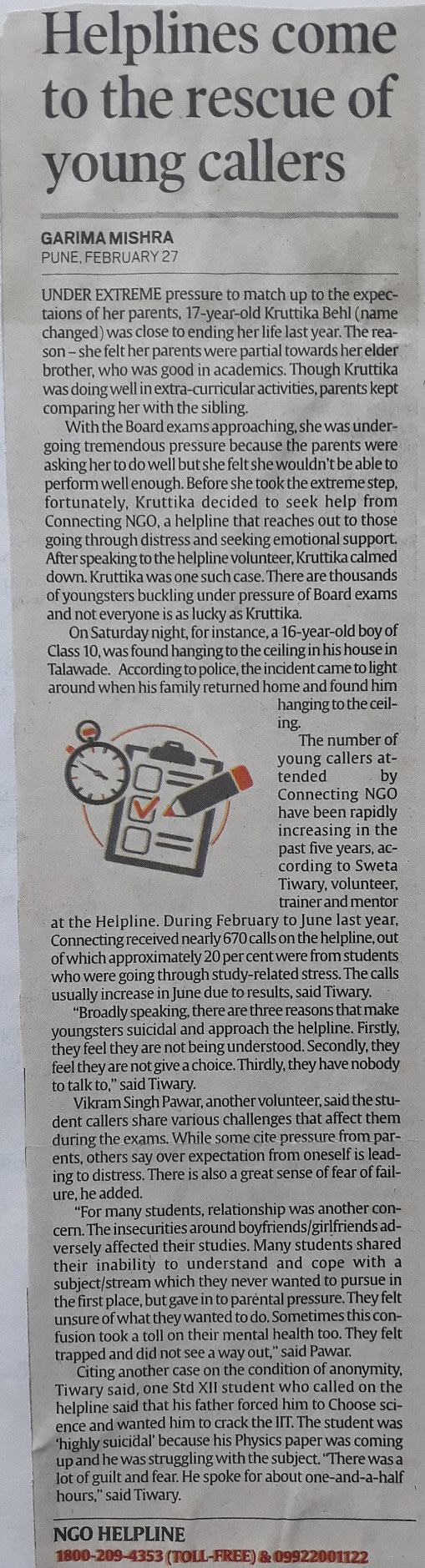
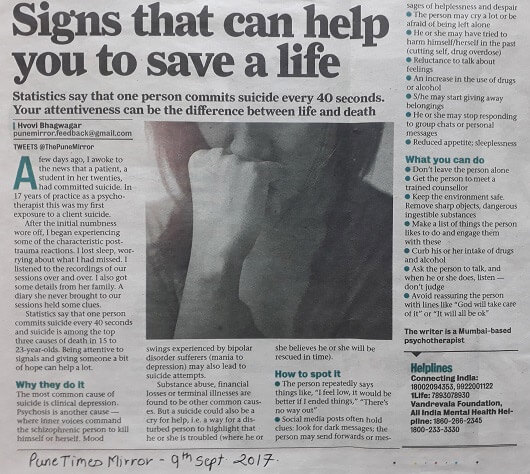
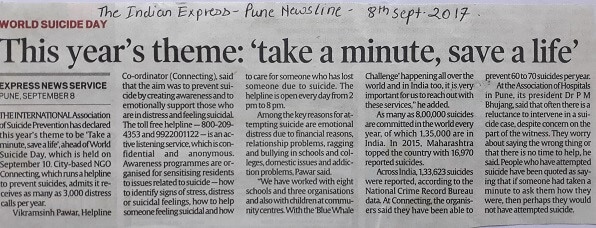
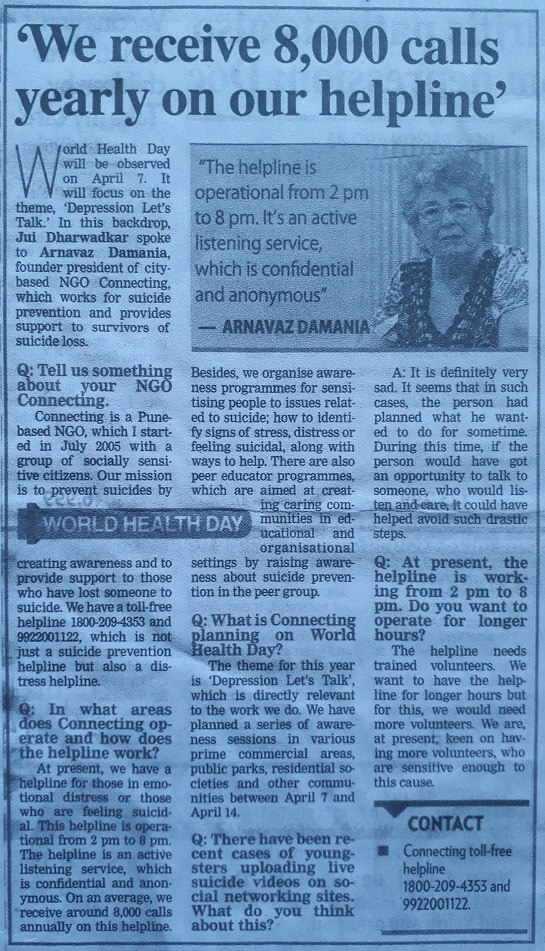
How to talk to someone thinking of suicide
Myths and facts about suicide
Our world is home to 1.8 billion people of age of 10-24 years, contributing about one-fourth of the total world population. India has the highest number of this age group with 356 million, despite having a smaller population than China. Young age is a formative phase with major impacts on the future. Taking care of [...]
Connecting Trust is a leading non-governmental organisation in India that is working to bring about large-scale systemic changes in the mental health field by making mental health institutions, systems, and communities intersectional and inclusive. We are committed to ensuring that all people have access to mental health services. Our work is dependent on cross-sectoral collaborations [...]
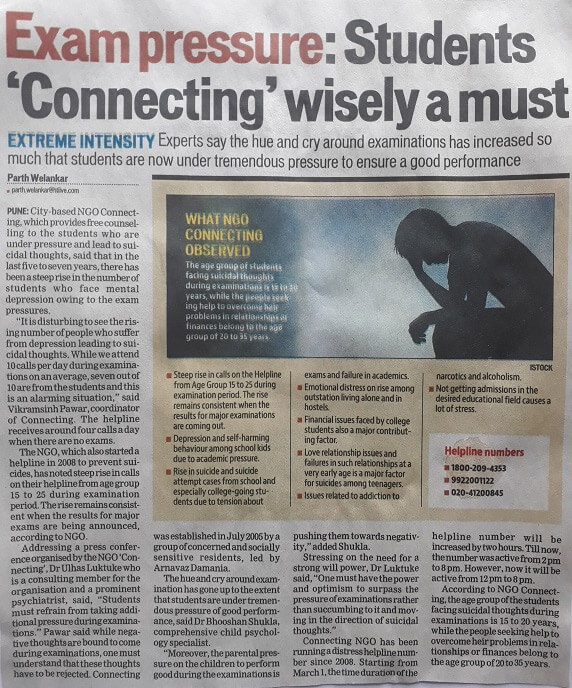
Suicide Prevention Program Suicide is a huge public health crisis that affects millions of people. Approximately 47,500 individuals died by suicide in 2019. Suicide ranked 10th among all causes of death in the country in 2019. The act of suicide is a difficult and painful experience, yet it is often avoidable. It is possible to [...]
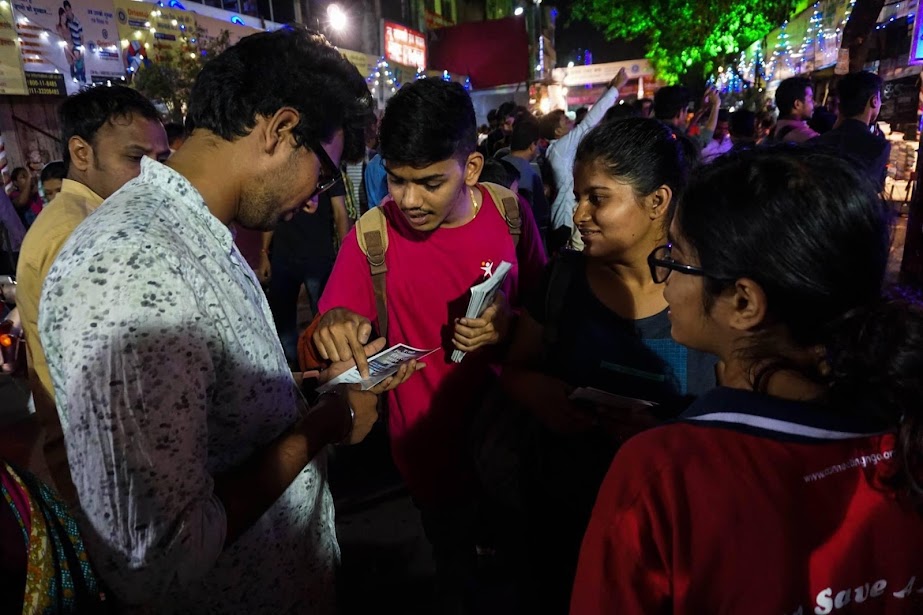
A mental illness is a medical disorder that impairs a person’s ability to think, feel, behave, or feel in general. These disorders have a significant influence on day-to-day functioning and may also impair one’s capacity to form relationships with others. It is important to understand that you are not alone if you are suffering from, or suspect you may be suffering from, a mental illness. It is considerably more prevalent than you may imagine that people suffer from mental health disorders, mostly because many don’t want to, or are afraid to, talk about it. However:
A mental health issue does not occur as a result of a single occurrence. According to the research, there are several, interconnected factors. Genetics, environment, and way of life all have an impact on whether or not someone develops a mental health disorder. Stressful work or home life, as well as traumatic experiences in one’s life, might make certain people more vulnerable. It’s possible that biochemical processes and circuits, as well as basic brain anatomy, are involved.
None of this implies that you’re a failure or that you or your family members did something “bad,” though. There is no one to blame when it comes to mental disease. In addition, for many people, recovery — including significant roles in social life, education, and employment — is achievable, particularly when treatment is initiated early and when the individual takes an active role in his or her own recovery.
In case you are someone who is looking for help with your mental health, you can reach out to our mental health NGO. Our counsellors are well-trained who can guide you in times of crisis.
Our world is home to 1.8 billion people of age of 10-24 years, contributing about one-fourth of the total world population. India has the highest number of this age group with 356 million, despite having a smaller population than China. Young age is a formative phase with major impacts on the future. Taking care of [...]
Connecting Trust is a leading non-governmental organisation in India that is working to bring about large-scale systemic changes in the mental health field by making mental health institutions, systems, and communities intersectional and inclusive. We are committed to ensuring that all people have access to mental health services. Our work is dependent on cross-sectoral collaborations [...]
Suicide Prevention Program Suicide is a huge public health crisis that affects millions of people. Approximately 47,500 individuals died by suicide in 2019. Suicide ranked 10th among all causes of death in the country in 2019. The act of suicide is a difficult and painful experience, yet it is often avoidable. It is possible to [...]
Connecting Trust
Atur Chambers, 2nd Floor, Above Coffee House, Opposite SGS Mall,
Moledina Road, Camp,
Pune 411001
Maharashtra – INDIA
Web Design Company - Graphinet